Category: Procurement, Contracts and Supplier Data Analysis New
How Do We Use the Balanced Scorecard in Government Procurement and Contracts Management?
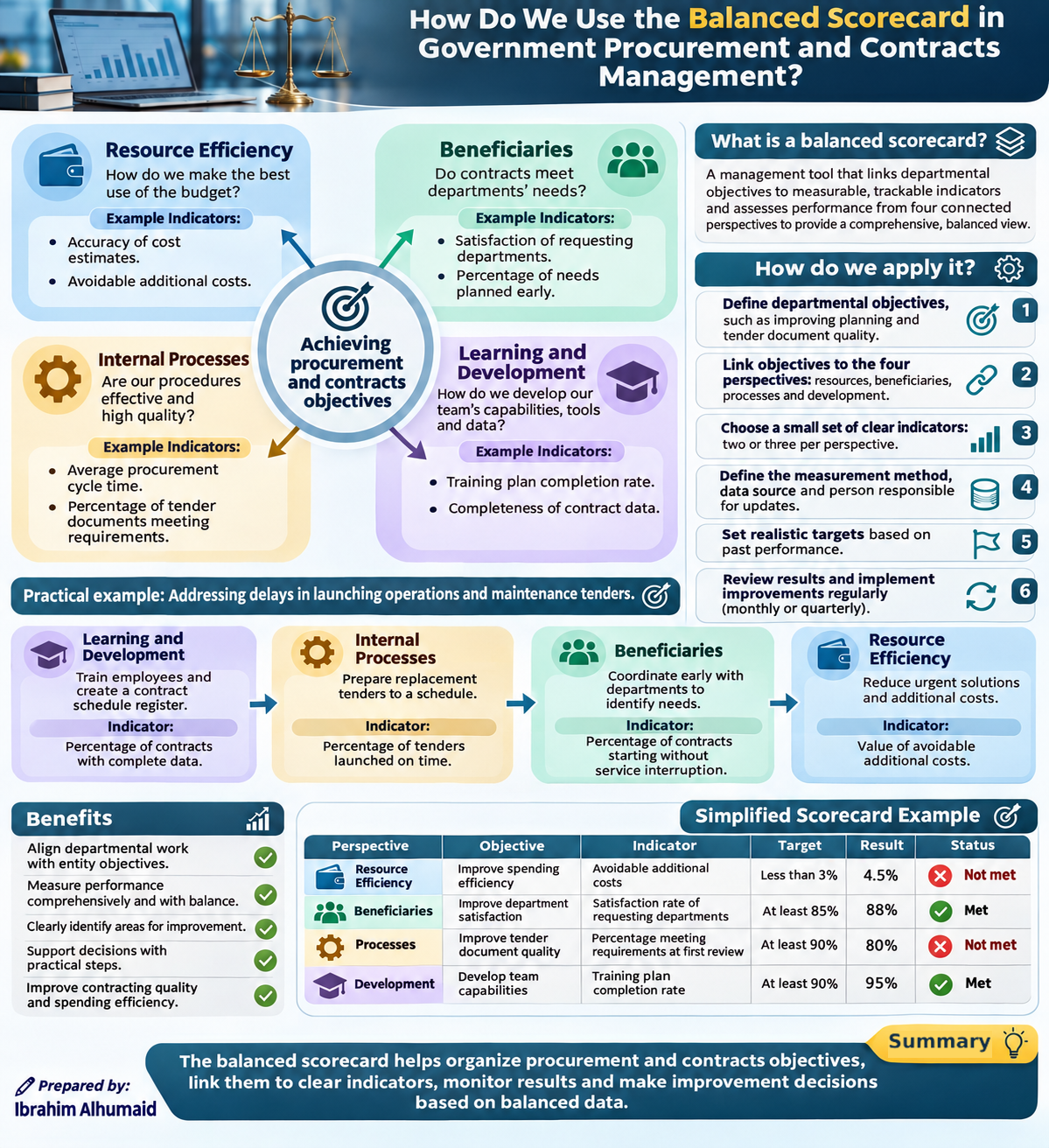
What is a balanced scorecard? A management tool linking departmental objectives to measurable, trackable indicators and assessing performance from four connected perspectives for a comprehensive, balanced view.
Achieving procurement and contracts objectives.
Resource efficiency: How do we make the best use of the budget? Example indicators: Accuracy of cost estimates; avoidable additional costs.
Beneficiaries: Do contracts meet departments’ needs? Example indicators: Satisfaction of requesting departments; percentage of needs planned early.
Internal processes: Are our procedures effective and high quality? Example indicators: Average procurement cycle time; percentage of tender documents meeting requirements.
Learning and development: How do we develop our team’s capabilities, tools and data? Example indicators: Training plan completion rate; completeness of contract data.
How do we apply it? 1 Define departmental objectives, such as improving planning and tender document quality. 2 Link objectives to the four perspectives: resources, beneficiaries, processes and development. 3 Choose two or three clear indicators per perspective. 4 Define the measurement method, data source and person responsible for updates. 5 Set realistic targets based on past performance. 6 Review results and implement improvements regularly, monthly or quarterly.
Practical example: Addressing delays in launching operations and maintenance tenders. Learning and development: Train employees and create a contract schedule register. Indicator: Percentage of contracts with complete data. Internal processes: Prepare replacement tenders to a schedule. Indicator: Percentage of tenders launched on time. Beneficiaries: Coordinate early with departments to identify needs. Indicator: Percentage of contracts starting without service interruption. Resource efficiency: Reduce urgent solutions and additional costs. Indicator: Value of avoidable additional costs.
Simplified scorecard example. Resource efficiency: Improve spending efficiency. Indicator: Avoidable additional costs. Target: Less than 3%. Result: 4.5%. Status: Not met. Beneficiaries: Improve department satisfaction. Indicator: Satisfaction rate of requesting departments. Target: At least 85%. Result: 88%. Status: Met. Processes: Improve tender document quality. Indicator: Percentage meeting requirements at first review. Target: At least 90%. Result: 80%. Status: Not met. Development: Develop team capabilities. Indicator: Training plan completion rate. Target: At least 90%. Result: 95%. Status: Met.
Benefits: Align departmental work with entity objectives. Measure performance comprehensively and with balance. Clearly identify areas for improvement. Support decisions with practical steps. Improve contracting quality and spending efficiency.
Summary: The balanced scorecard helps organize procurement and contracts objectives, link them to clear indicators, monitor results and make improvement decisions based on balanced data.
Prepared by: Ibrahim Alhumaid.