Committees
Confirmation Bias in Bid Evaluation
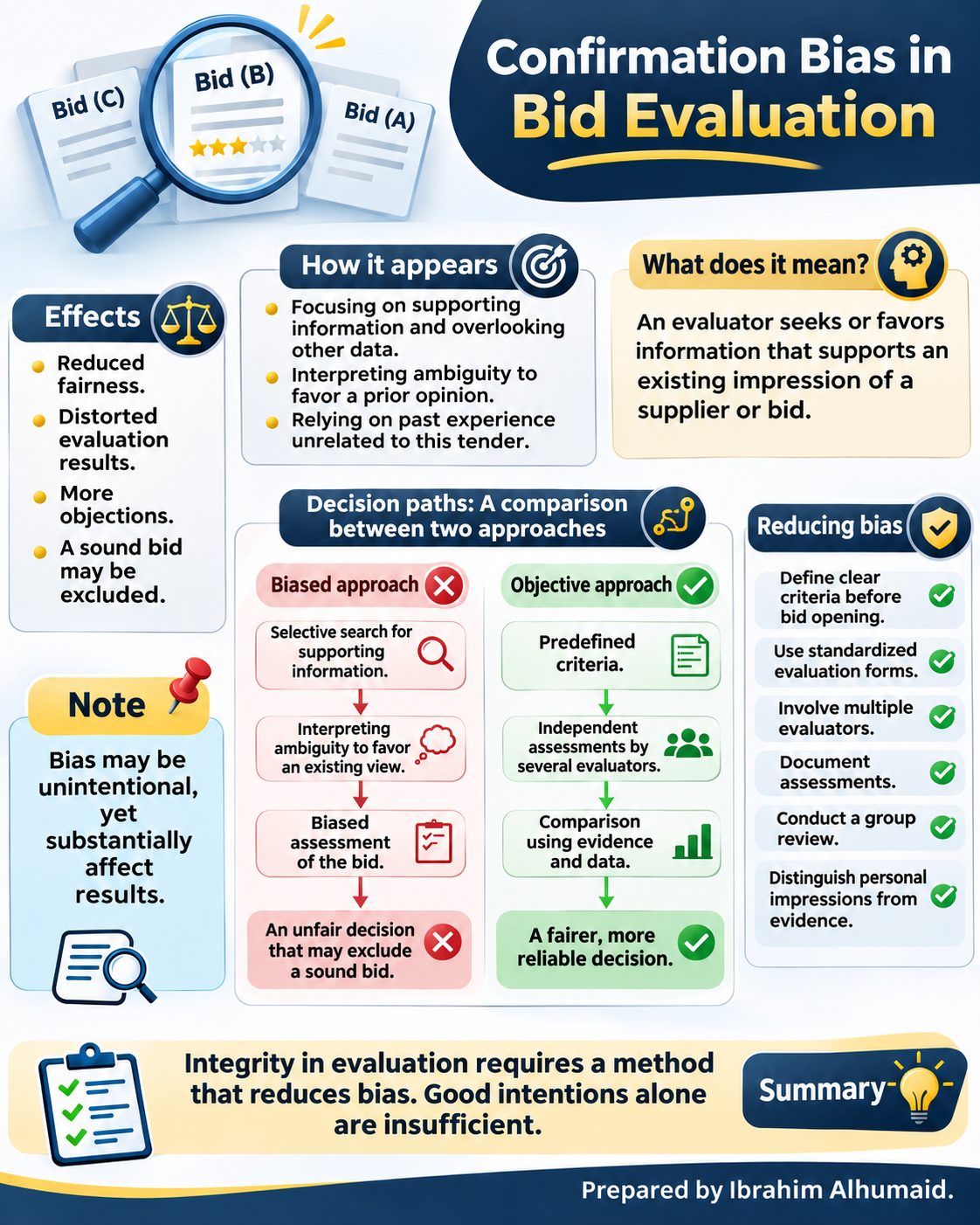
What does confirmation bias mean?
An evaluator seeks or favors information that supports an existing impression of a particular supplier or bid.
How it appears
- Focusing on supporting information and overlooking other data.
- Interpreting ambiguity to favor a prior opinion.
- Relying on past experience unrelated to the current tender.
Effects
Reduced fairness, distorted evaluation results, more objections and the possible exclusion of a sound bid.
Reducing bias
- Define clear criteria before bid opening.
- Use standardized evaluation forms.
- Involve multiple evaluators.
- Document assessments.
- Conduct a group review.
- Distinguish personal impressions from evidence.
Two decision paths
Objective approach. Apply predefined criteria. Several evaluators assess the bid independently, then compare their findings using evidence and data. This supports a fairer, more reliable decision.
Biased approach. An evaluator selectively searches for supporting information, interprets ambiguity to favor an existing view and produces a biased assessment. An unfair decision may exclude a sound bid.
Note
Bias may be unintentional and still have a substantial effect on results.
Summary
Integrity in evaluation requires a method that reduces bias. Good intentions alone are insufficient.
Prepared by Ibrahim Alhumaid