Contracts
How Can We Detect the Gap Between Contract Scope and Actual Delivery?
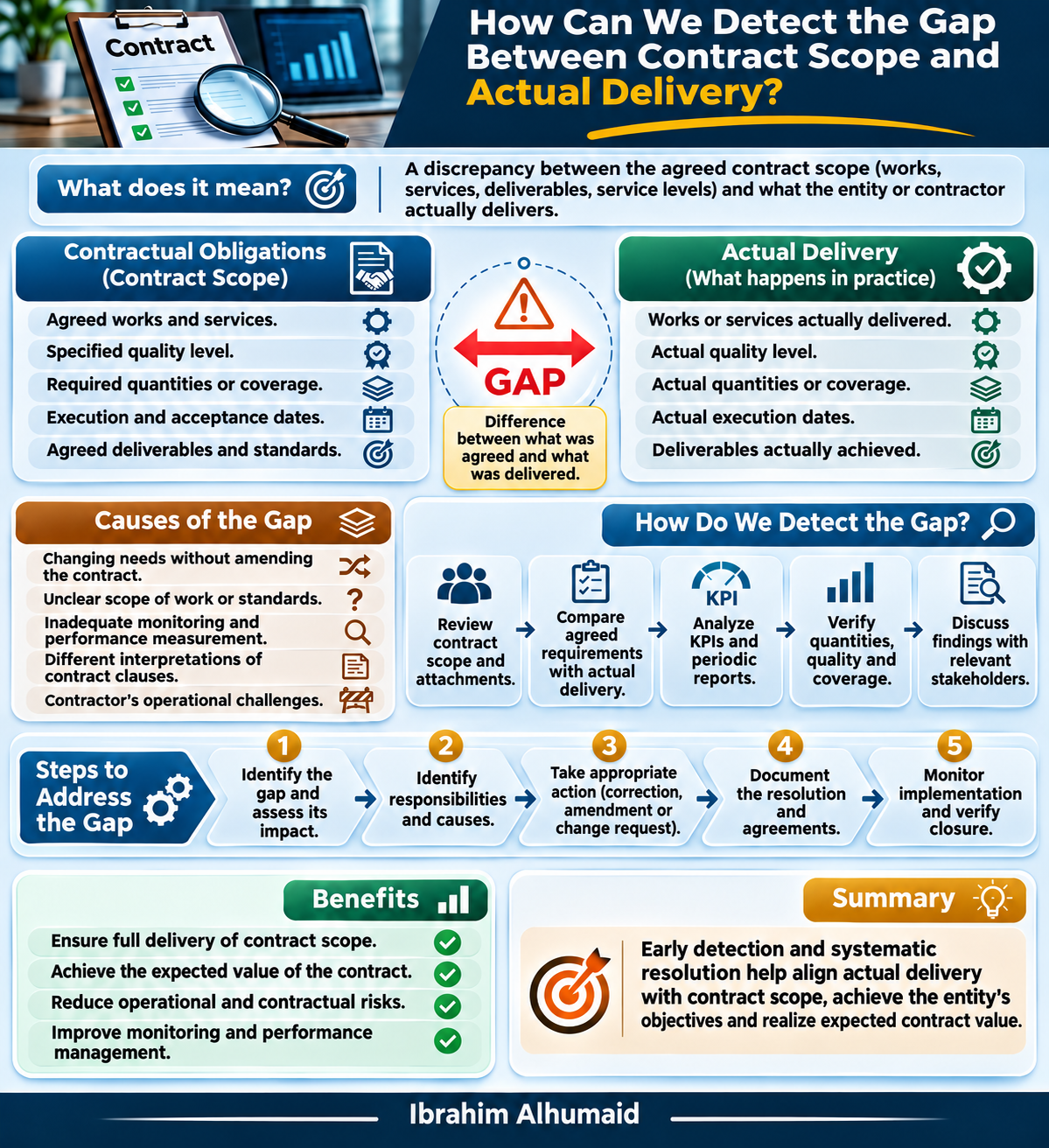
What does it mean?
A discrepancy between the agreed contract scope (works, services, deliverables and service levels) and what the entity or contractor actually delivers.
Contractual obligations (contract scope)
- Agreed works and services.
- Specified quality level.
- Required quantities or coverage.
- Execution and acceptance dates.
- Agreed deliverables and standards.
Actual delivery (what happens in practice)
- Works or services actually delivered.
- Actual quality level.
- Actual quantities or coverage.
- Actual execution dates.
- Deliverables actually achieved.
The gap
The difference between what was agreed and what was actually delivered.
Causes of the gap
- Changing needs without amending the contract.
- Unclear scope of work or standards.
- Inadequate monitoring and performance measurement.
- Different interpretations of contract clauses.
- Contractor operational challenges.
How to detect the gap
- Review the contract scope and attachments.
- Compare agreed requirements with actual delivery.
- Analyze KPIs and periodic reports.
- Verify quantities, quality and coverage.
- Discuss findings with relevant stakeholders.
Steps to address the gap
- Identify the gap and assess its impact.
- Identify responsibilities and causes.
- Take appropriate action (correction, amendment or change request).
- Document the resolution and agreements.
- Monitor implementation and verify closure.
Benefits
- Ensure full delivery of the contract scope.
- Achieve the expected value of the contract.
- Reduce operational and contractual risks.
- Improve monitoring and performance management.
Summary
Early detection and systematic resolution help align actual delivery with the contract scope, achieve the entity’s objectives and realize expected contract value.
Prepared by Ibrahim Alhumaid