Contracts
How Can We Identify the Right Intervention Point Before a Contractual Observation Becomes a Dispute?
What does it mean?
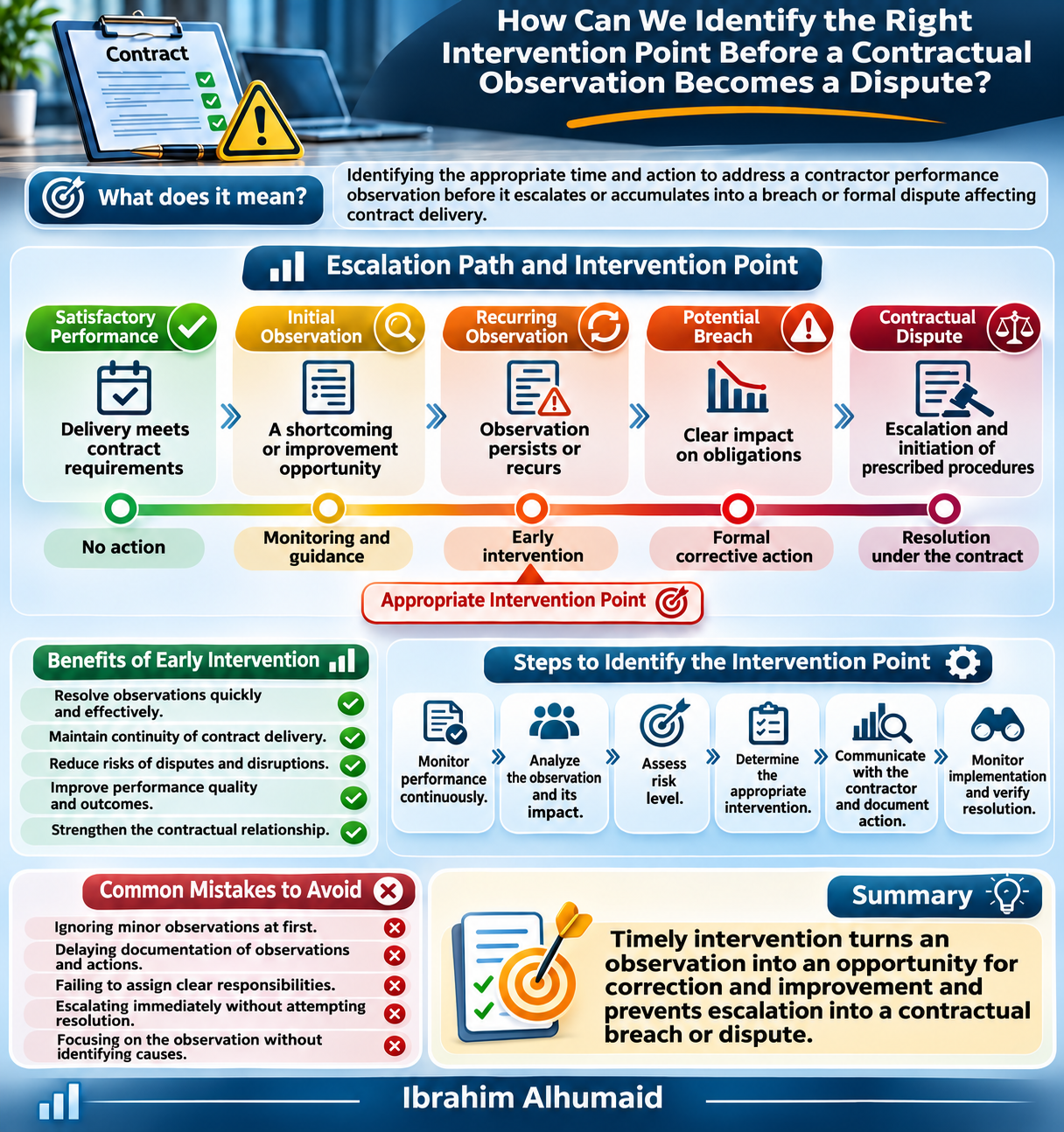
Identifying the appropriate time and action to address an observation about contractor performance before it escalates or accumulates into a contractual breach or formal dispute affecting delivery.
Escalation path and intervention point
- Satisfactory performance: delivery meets contract requirements; no action.
- Initial observation: a shortcoming or opportunity for improvement; monitoring and guidance.
- Recurring observation: the issue persists or recurs; early intervention. This is the appropriate intervention point highlighted in the diagram.
- Potential breach: clear impact on contractual obligations; formal corrective action.
- Contractual dispute: escalation and initiation of prescribed procedures; resolution under the contract.
Steps to identify the intervention point
- Monitor performance continuously.
- Analyze the observation and determine its impact.
- Assess the level of risk.
- Determine the appropriate intervention.
- Communicate with the contractor and document the action.
- Monitor implementation and verify resolution.
Benefits of early intervention
- Address observations quickly and effectively.
- Maintain continuity of contract delivery.
- Reduce the risk of disputes and disruptions.
- Improve performance quality and outcomes.
- Strengthen the contractual relationship with the contractor.
Common mistakes to avoid
- Ignoring minor observations at the outset.
- Delaying documentation of the observation and action taken.
- Failing to assign clear responsibilities for resolution.
- Escalating an observation immediately without attempting resolution.
- Focusing on the observation without understanding its causes.
Summary
Timely intervention turns an observation into an opportunity for correction and improvement and prevents its escalation into a contractual breach or dispute.
Prepared by Ibrahim Alhumaid