Tools for early planning in procurement, contracts, and supplier management
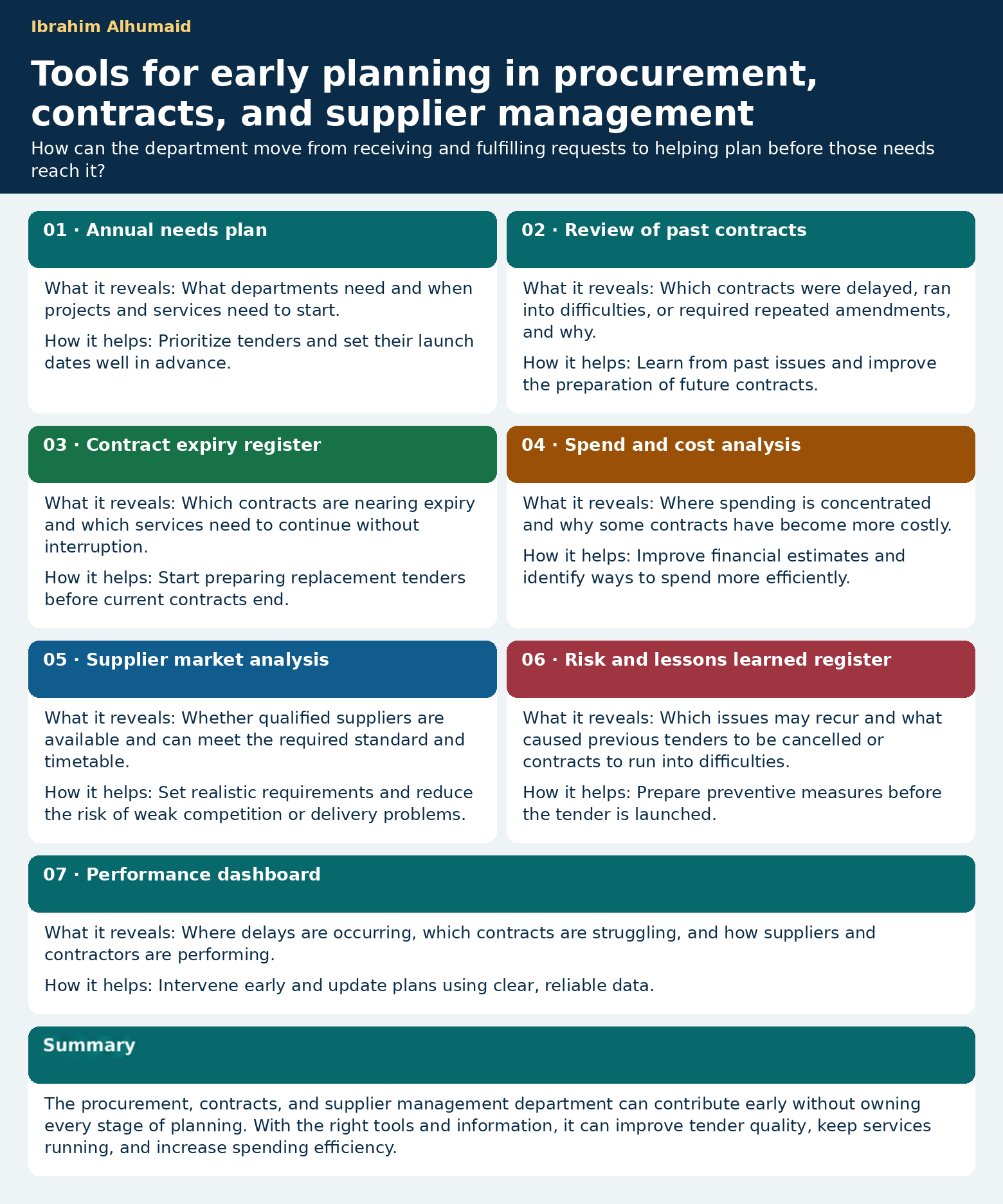
How can the department move from receiving and fulfilling requests to helping plan before those needs reach it?
01 · Annual needs plan
- What it reveals: What departments need and when projects and services need to start.
- How it helps: Prioritize tenders and set their launch dates well in advance.
02 · Review of past contracts
- What it reveals: Which contracts were delayed, ran into difficulties, or required repeated amendments, and why.
- How it helps: Learn from past issues and improve the preparation of future contracts.
03 · Contract expiry register
- What it reveals: Which contracts are nearing expiry and which services need to continue without interruption.
- How it helps: Start preparing replacement tenders before current contracts end.
04 · Spend and cost analysis
- What it reveals: Where spending is concentrated and why some contracts have become more costly.
- How it helps: Improve financial estimates and identify ways to spend more efficiently.
05 · Supplier market analysis
- What it reveals: Whether qualified suppliers are available and can meet the required standard and timetable.
- How it helps: Set realistic requirements and reduce the risk of weak competition or delivery problems.
06 · Risk and lessons learned register
- What it reveals: Which issues may recur and what caused previous tenders to be cancelled or contracts to run into difficulties.
- How it helps: Prepare preventive measures before the tender is launched.
07 · Performance dashboard
- What it reveals: Where delays are occurring, which contracts are struggling, and how suppliers and contractors are performing.
- How it helps: Intervene early and update plans using clear, reliable data.
Summary
- The procurement, contracts, and supplier management department can contribute early without owning every stage of planning. With the right tools and information, it can improve tender quality, keep services running, and increase spending efficiency.