Category: Data Analytics
Using Gap Analysis to Improve Procurement, Contracts and Supplier Management
Read the full English text
What gap analysis tells you
Definition
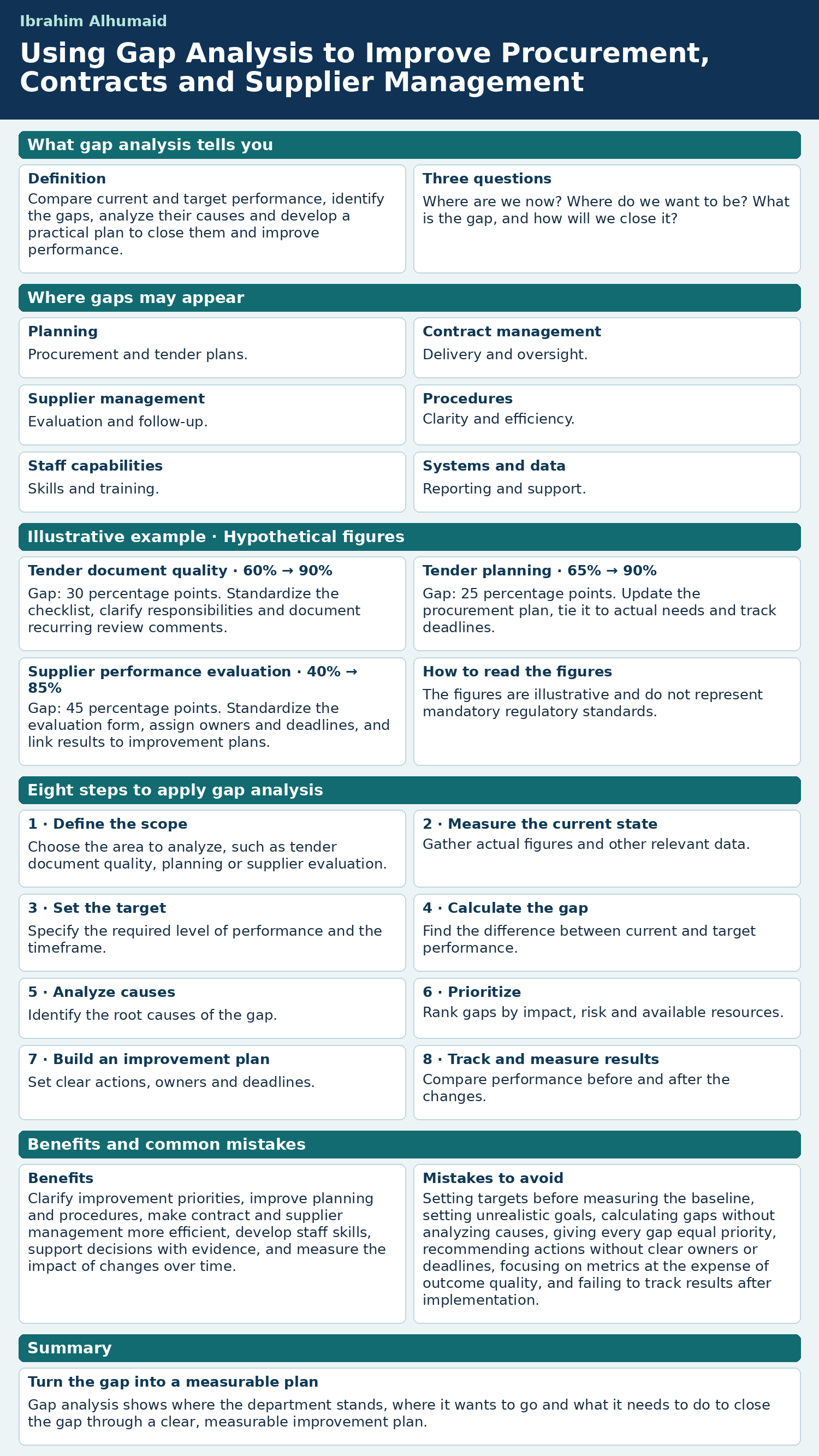
Compare current and target performance, identify the gaps, analyze their causes and develop a practical plan to close them and improve performance.
Three questions
Where are we now? Where do we want to be? What is the gap, and how will we close it?
Where gaps may appear
Planning
Procurement and tender plans.
Contract management
Delivery and oversight.
Supplier management
Evaluation and follow-up.
Procedures
Clarity and efficiency.
Staff capabilities
Skills and training.
Systems and data
Reporting and support.
Illustrative example · Hypothetical figures
Tender document quality · 60% → 90%
Gap: 30 percentage points. Standardize the checklist, clarify responsibilities and document recurring review comments.
Tender planning · 65% → 90%
Gap: 25 percentage points. Update the procurement plan, tie it to actual needs and track deadlines.
Supplier performance evaluation · 40% → 85%
Gap: 45 percentage points. Standardize the evaluation form, assign owners and deadlines, and link results to improvement plans.
How to read the figures
The figures are illustrative and do not represent mandatory regulatory standards.
Eight steps to apply gap analysis
1 · Define the scope
Choose the area to analyze, such as tender document quality, planning or supplier evaluation.
2 · Measure the current state
Gather actual figures and other relevant data.
3 · Set the target
Specify the required level of performance and the timeframe.
4 · Calculate the gap
Find the difference between current and target performance.
5 · Analyze causes
Identify the root causes of the gap.
6 · Prioritize
Rank gaps by impact, risk and available resources.
7 · Build an improvement plan
Set clear actions, owners and deadlines.
8 · Track and measure results
Compare performance before and after the changes.
Benefits and common mistakes
Benefits
Clarify improvement priorities, improve planning and procedures, make contract and supplier management more efficient, develop staff skills, support decisions with evidence, and measure the impact of changes over time.
Mistakes to avoid
Setting targets before measuring the baseline, setting unrealistic goals, calculating gaps without analyzing causes, giving every gap equal priority, recommending actions without clear owners or deadlines, focusing on metrics at the expense of outcome quality, and failing to track results after implementation.
Summary
Turn the gap into a measurable plan
Gap analysis shows where the department stands, where it wants to go and what it needs to do to close the gap through a clear, measurable improvement plan.