Category: Contracts
Government Project Contract Cases: Who Bears the Cost When Circumstances Change?
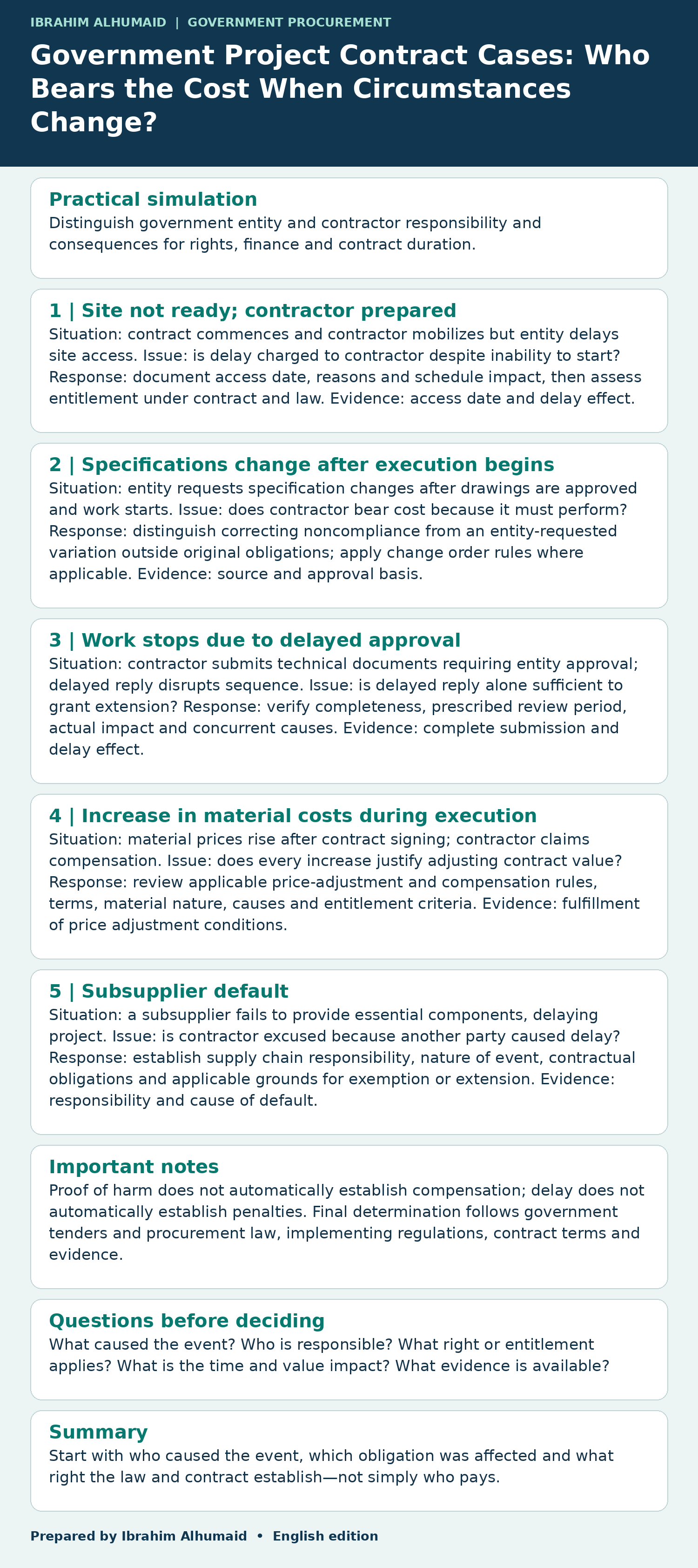
English transcript
Practical simulation
Distinguish government entity and contractor responsibility and consequences for rights, finance and contract duration.
1 | Site not ready; contractor prepared
Situation: contract commences and contractor mobilizes but entity delays site access. Issue: is delay charged to contractor despite inability to start? Response: document access date, reasons and schedule impact, then assess entitlement under contract and law. Evidence: access date and delay effect.
2 | Specifications change after execution begins
Situation: entity requests specification changes after drawings are approved and work starts. Issue: does contractor bear cost because it must perform? Response: distinguish correcting noncompliance from an entity-requested variation outside original obligations; apply change order rules where applicable. Evidence: source and approval basis.
3 | Work stops due to delayed approval
Situation: contractor submits technical documents requiring entity approval; delayed reply disrupts sequence. Issue: is delayed reply alone sufficient to grant extension? Response: verify completeness, prescribed review period, actual impact and concurrent causes. Evidence: complete submission and delay effect.
4 | Increase in material costs during execution
Situation: material prices rise after contract signing; contractor claims compensation. Issue: does every increase justify adjusting contract value? Response: review applicable price-adjustment and compensation rules, terms, material nature, causes and entitlement criteria. Evidence: fulfillment of price adjustment conditions.
5 | Subsupplier default
Situation: a subsupplier fails to provide essential components, delaying project. Issue: is contractor excused because another party caused delay? Response: establish supply chain responsibility, nature of event, contractual obligations and applicable grounds for exemption or extension. Evidence: responsibility and cause of default.
Important notes
Proof of harm does not automatically establish compensation; delay does not automatically establish penalties. Final determination follows government tenders and procurement law, implementing regulations, contract terms and evidence.
Questions before deciding
What caused the event? Who is responsible? What right or entitlement applies? What is the time and value impact? What evidence is available?
Summary
Start with who caused the event, which obligation was affected and what right the law and contract establish—not simply who pays.