Supplier Performance Evaluation in Saudi Government Tenders
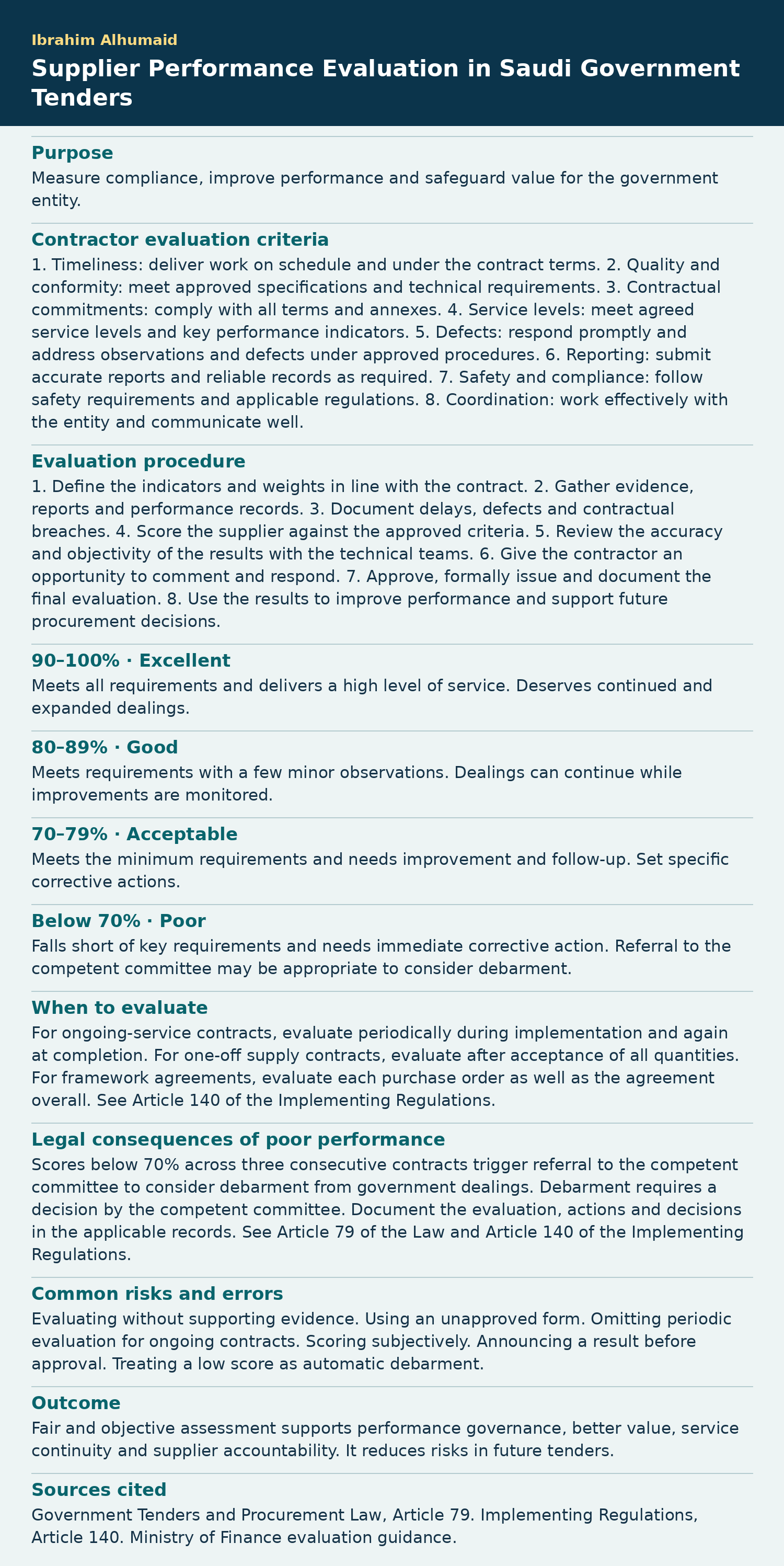
Purpose
Measure compliance, improve performance and safeguard value for the government entity.
Contractor evaluation criteria
1. Timeliness: deliver work on schedule and under the contract terms. 2. Quality and conformity: meet approved specifications and technical requirements. 3. Contractual commitments: comply with all terms and annexes. 4. Service levels: meet agreed service levels and key performance indicators. 5. Defects: respond promptly and address observations and defects under approved procedures. 6. Reporting: submit accurate reports and reliable records as required. 7. Safety and compliance: follow safety requirements and applicable regulations. 8. Coordination: work effectively with the entity and communicate well.
Evaluation procedure
1. Define the indicators and weights in line with the contract. 2. Gather evidence, reports and performance records. 3. Document delays, defects and contractual breaches. 4. Score the supplier against the approved criteria. 5. Review the accuracy and objectivity of the results with the technical teams. 6. Give the contractor an opportunity to comment and respond. 7. Approve, formally issue and document the final evaluation. 8. Use the results to improve performance and support future procurement decisions.
90–100% · Excellent
Meets all requirements and delivers a high level of service. Deserves continued and expanded dealings.
80–89% · Good
Meets requirements with a few minor observations. Dealings can continue while improvements are monitored.
70–79% · Acceptable
Meets the minimum requirements and needs improvement and follow-up. Set specific corrective actions.
Below 70% · Poor
Falls short of key requirements and needs immediate corrective action. Referral to the competent committee may be appropriate to consider debarment.
When to evaluate
For ongoing-service contracts, evaluate periodically during implementation and again at completion. For one-off supply contracts, evaluate after acceptance of all quantities. For framework agreements, evaluate each purchase order as well as the agreement overall. See Article 140 of the Implementing Regulations.
Legal consequences of poor performance
Scores below 70% across three consecutive contracts trigger referral to the competent committee to consider debarment from government dealings. Debarment requires a decision by the competent committee. Document the evaluation, actions and decisions in the applicable records. See Article 79 of the Law and Article 140 of the Implementing Regulations.
Common risks and errors
Evaluating without supporting evidence. Using an unapproved form. Omitting periodic evaluation for ongoing contracts. Scoring subjectively. Announcing a result before approval. Treating a low score as automatic debarment.
Outcome
Fair and objective assessment supports performance governance, better value, service continuity and supplier accountability. It reduces risks in future tenders.
Sources cited
Government Tenders and Procurement Law, Article 79. Implementing Regulations, Article 140. Ministry of Finance evaluation guidance.