Who Decides When Procurement Objects to Technically Approved Specifications?
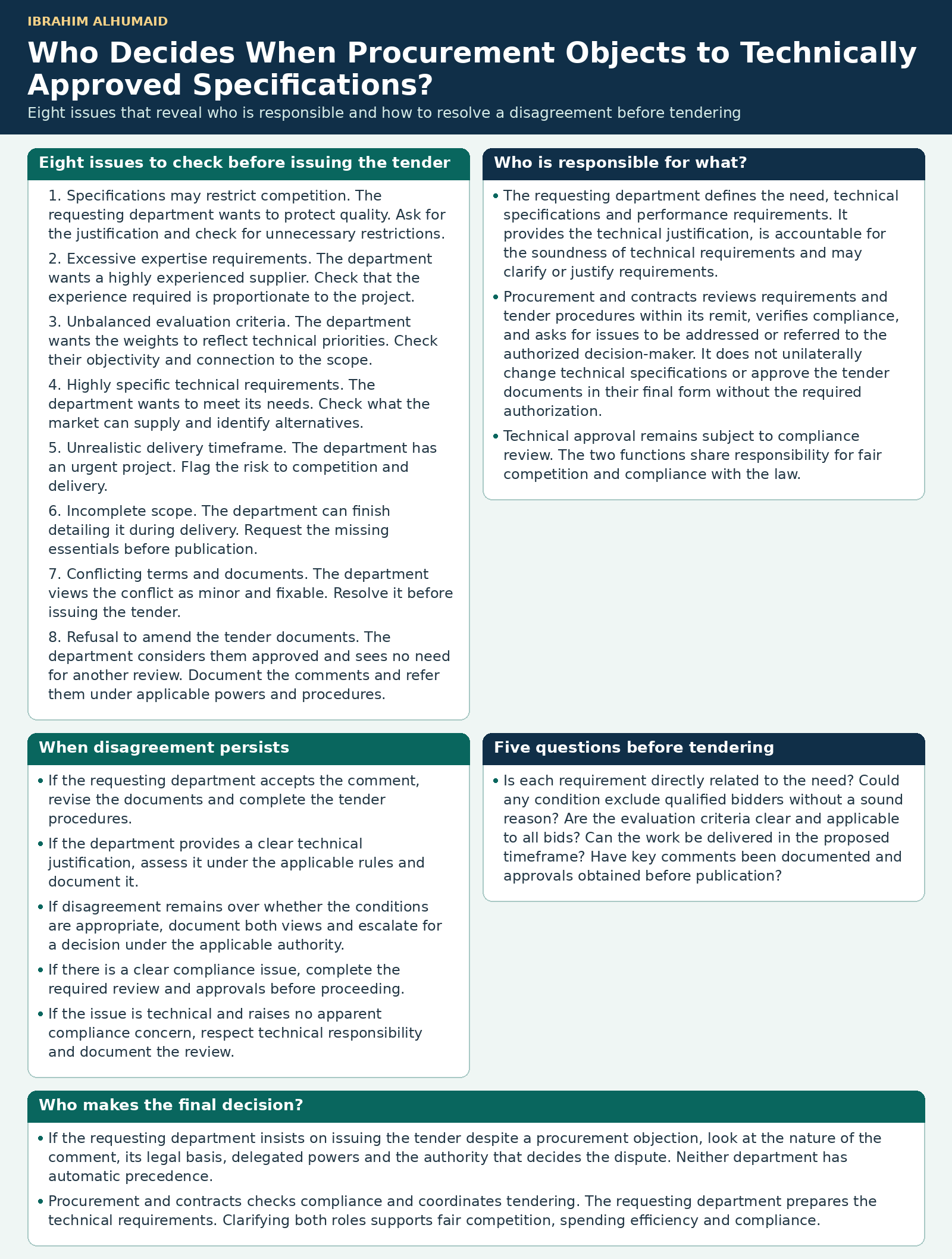
Eight issues that reveal who is responsible and how to resolve a disagreement before tendering
Eight issues to check before issuing the tender
- 1. Specifications may restrict competition. The requesting department wants to protect quality. Ask for the justification and check for unnecessary restrictions.
- 2. Excessive expertise requirements. The department wants a highly experienced supplier. Check that the experience required is proportionate to the project.
- 3. Unbalanced evaluation criteria. The department wants the weights to reflect technical priorities. Check their objectivity and connection to the scope.
- 4. Highly specific technical requirements. The department wants to meet its needs. Check what the market can supply and identify alternatives.
- 5. Unrealistic delivery timeframe. The department has an urgent project. Flag the risk to competition and delivery.
- 6. Incomplete scope. The department can finish detailing it during delivery. Request the missing essentials before publication.
- 7. Conflicting terms and documents. The department views the conflict as minor and fixable. Resolve it before issuing the tender.
- 8. Refusal to amend the tender documents. The department considers them approved and sees no need for another review. Document the comments and refer them under applicable powers and procedures.
Who is responsible for what?
- The requesting department defines the need, technical specifications and performance requirements. It provides the technical justification, is accountable for the soundness of technical requirements and may clarify or justify requirements.
- Procurement and contracts reviews requirements and tender procedures within its remit, verifies compliance, and asks for issues to be addressed or referred to the authorized decision-maker. It does not unilaterally change technical specifications or approve the tender documents in their final form without the required authorization.
- Technical approval remains subject to compliance review. The two functions share responsibility for fair competition and compliance with the law.
When disagreement persists
- If the requesting department accepts the comment, revise the documents and complete the tender procedures.
- If the department provides a clear technical justification, assess it under the applicable rules and document it.
- If disagreement remains over whether the conditions are appropriate, document both views and escalate for a decision under the applicable authority.
- If there is a clear compliance issue, complete the required review and approvals before proceeding.
- If the issue is technical and raises no apparent compliance concern, respect technical responsibility and document the review.
Five questions before tendering
- Is each requirement directly related to the need? Could any condition exclude qualified bidders without a sound reason? Are the evaluation criteria clear and applicable to all bids? Can the work be delivered in the proposed timeframe? Have key comments been documented and approvals obtained before publication?
Who makes the final decision?
- If the requesting department insists on issuing the tender despite a procurement objection, look at the nature of the comment, its legal basis, delegated powers and the authority that decides the dispute. Neither department has automatic precedence.
- Procurement and contracts checks compliance and coordinates tendering. The requesting department prepares the technical requirements. Clarifying both roles supports fair competition, spending efficiency and compliance.