Estimated cost disclosure before bid opening
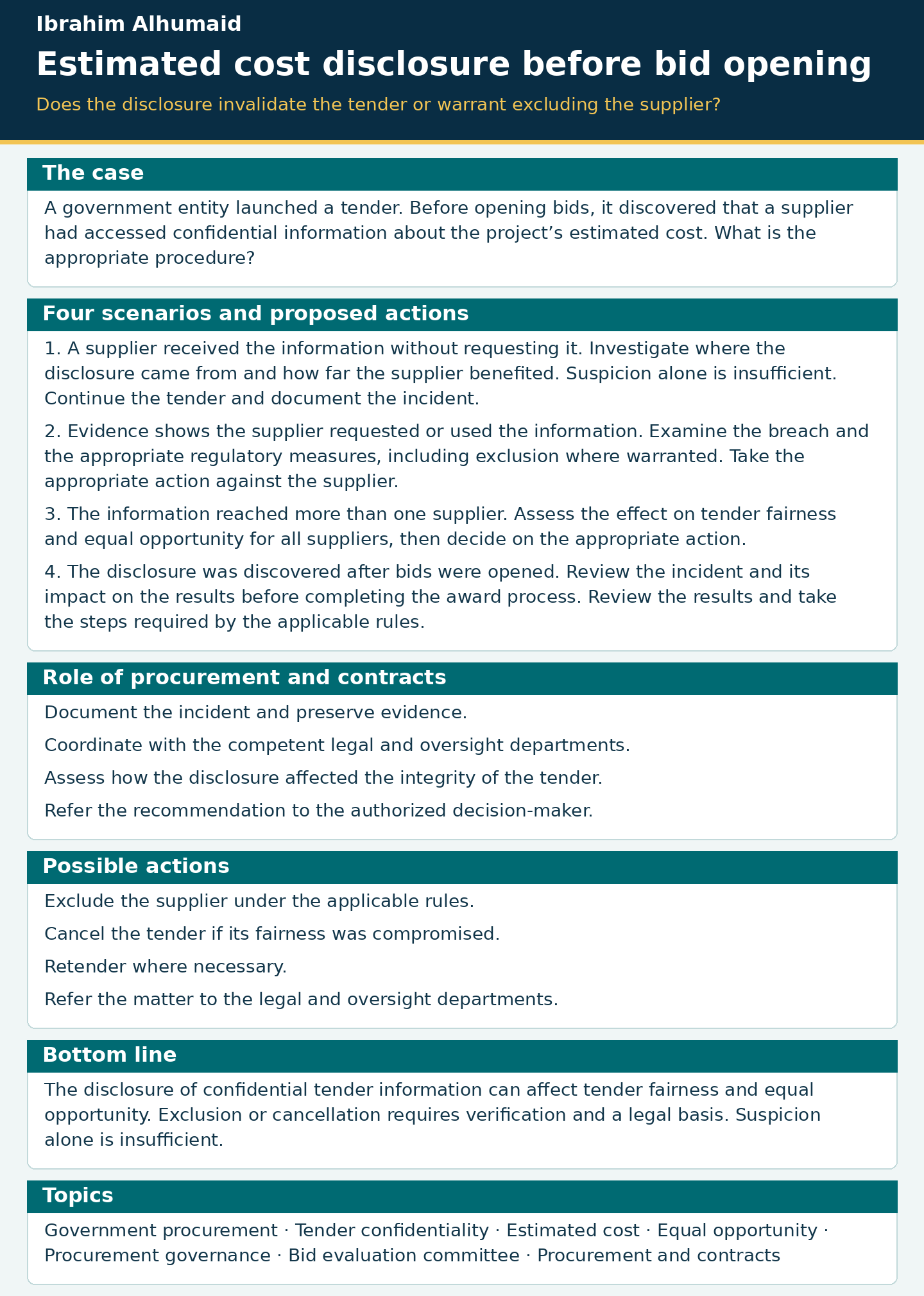
Does the disclosure invalidate the tender or warrant excluding the supplier?
The case
A government entity launched a tender. Before opening bids, it discovered that a supplier had accessed confidential information about the project’s estimated cost. What is the appropriate procedure?
Four scenarios and proposed actions
1. A supplier received the information without requesting it. Investigate where the disclosure came from and how far the supplier benefited. Suspicion alone is insufficient. Continue the tender and document the incident.
2. Evidence shows the supplier requested or used the information. Examine the breach and the appropriate regulatory measures, including exclusion where warranted. Take the appropriate action against the supplier.
3. The information reached more than one supplier. Assess the effect on tender fairness and equal opportunity for all suppliers, then decide on the appropriate action.
4. The disclosure was discovered after bids were opened. Review the incident and its impact on the results before completing the award process. Review the results and take the steps required by the applicable rules.
Role of procurement and contracts
Document the incident and preserve evidence.
Coordinate with the competent legal and oversight departments.
Assess how the disclosure affected the integrity of the tender.
Refer the recommendation to the authorized decision-maker.
Possible actions
Exclude the supplier under the applicable rules.
Cancel the tender if its fairness was compromised.
Retender where necessary.
Refer the matter to the legal and oversight departments.
Bottom line
The disclosure of confidential tender information can affect tender fairness and equal opportunity. Exclusion or cancellation requires verification and a legal basis. Suspicion alone is insufficient.
Topics
Government procurement · Tender confidentiality · Estimated cost · Equal opportunity · Procurement governance · Bid evaluation committee · Procurement and contracts