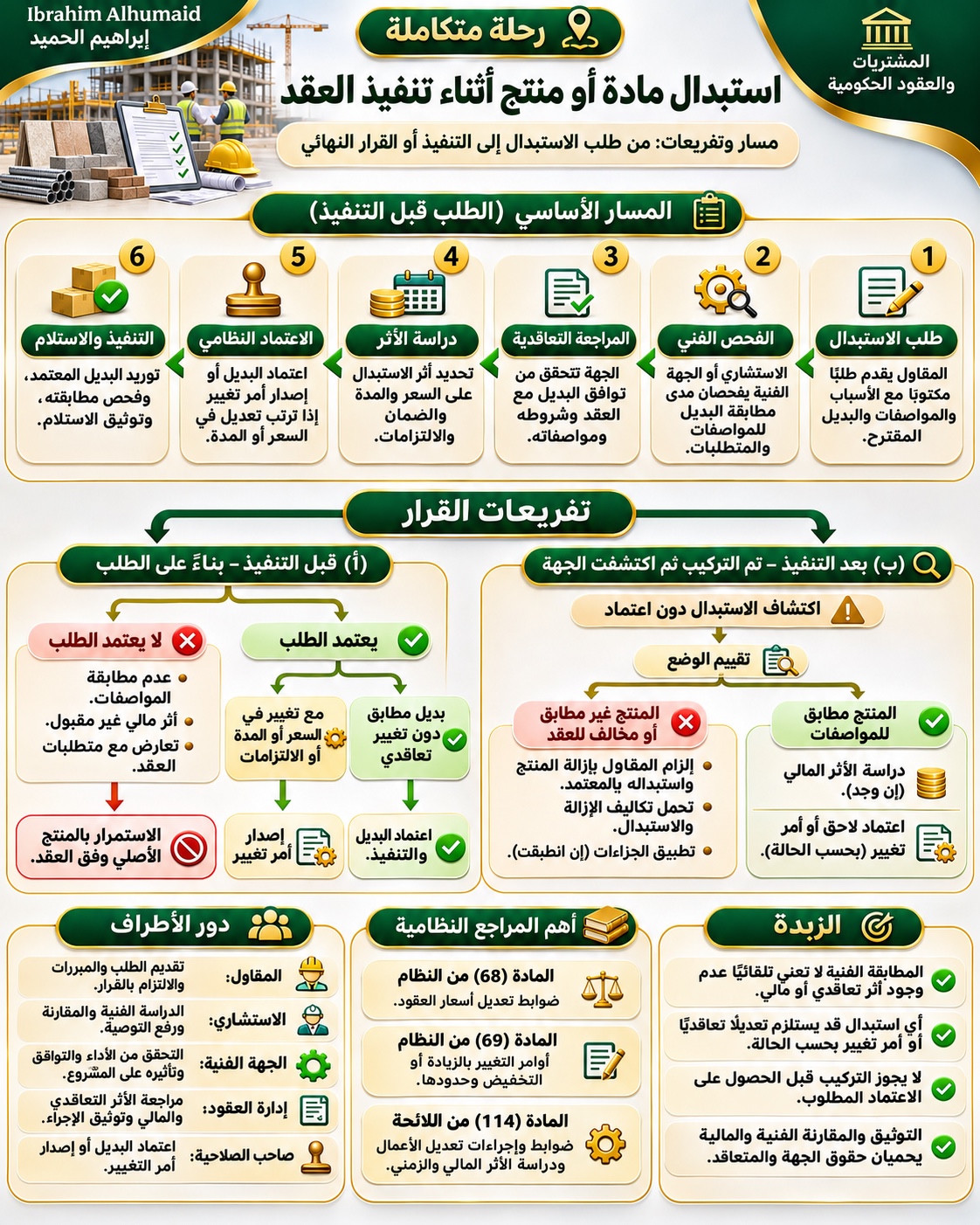
Substituting a Material or Product During Contract Performance
Decision paths: from the substitution request to installation or a final decision.
Main route: request before installation
- Submit a substitution request. The contractor provides the reasons, specifications and proposed alternative in writing.
- Assess technical conformity. The consultant or technical team checks the alternative against the specifications and requirements.
- Review the contract. The government entity checks whether the alternative meets the contract terms and specifications.
- Assess the impact. Consider price, schedule, warranties and other obligations.
- Obtain the required approval. Approve a conforming alternative where permitted. If the proposal changes contractual terms, determine whether an authorized change order or another formal contractual procedure is required.
- Implement and accept. Supply the approved alternative, verify conformity and document acceptance.
Decision branches
A. The contractor asks before installation
- Conforming and no contractual change: Approve the alternative through the prescribed process before installation.
- Conforming but price, schedule or obligations change: Assess the legal basis and route the required formal approval or change order to the authorized official before proceeding.
- Not approved: If the alternative fails the specifications, has an unacceptable financial impact or conflicts with contract requirements, continue with the original product under the contract.
B. The entity discovers an unapproved installation
Document the installation and assess technical, contractual and financial impacts before deciding on acceptance.
- Product meets the specifications: Check any financial impact and refer the case for a documented decision. Consider any later approval or change order only if a legal and contractual basis supports it. Conformity does not automatically cure missing approval or justify backdating.
- Product does not conform or breaches the contract: Use the contract’s remedies, which may include requiring removal and replacement with an approved product, allocating the contractor’s costs where justified and applying penalties if applicable.
Who does what?
- Contractor: Submits the request and reasons and follows the decision.
- Consultant: Conducts the technical review, compares alternatives and recommends a decision.
- Technical team: Verifies performance, compatibility and project impact.
- Contract management: Reviews contractual and financial consequences and documents the procedure.
- Authorized official: Approves the alternative or issues the change order as appropriate.
Regulatory references
These references concern Royal Decree M/128 and its implementing regulations. Check the transitional rules and the individual contract.
- Law Article 68: Contract price adjustments are limited to prescribed grounds; a proposed substitute does not in itself create a right to extra payment.
- Law Article 69: Governs change orders increasing or reducing contractual commitments and their limits.
- Amended Implementing Regulations Article 114: Sets conditions for changes, including scope, funding, time impact and approval authority.
Law and regulations · Article 114 amendment · Official Gazette: transitional provisions
Bottom line
- Technical equivalence does not rule out contractual or financial consequences.
- A substitute may require a formal contract amendment or change order, depending on the case.
- Do not install before securing required approval.
- Written evidence and technical and financial comparisons protect both parties.
View the original signed Arabic infographic