From Data to Decisions: Business Intelligence (BI)
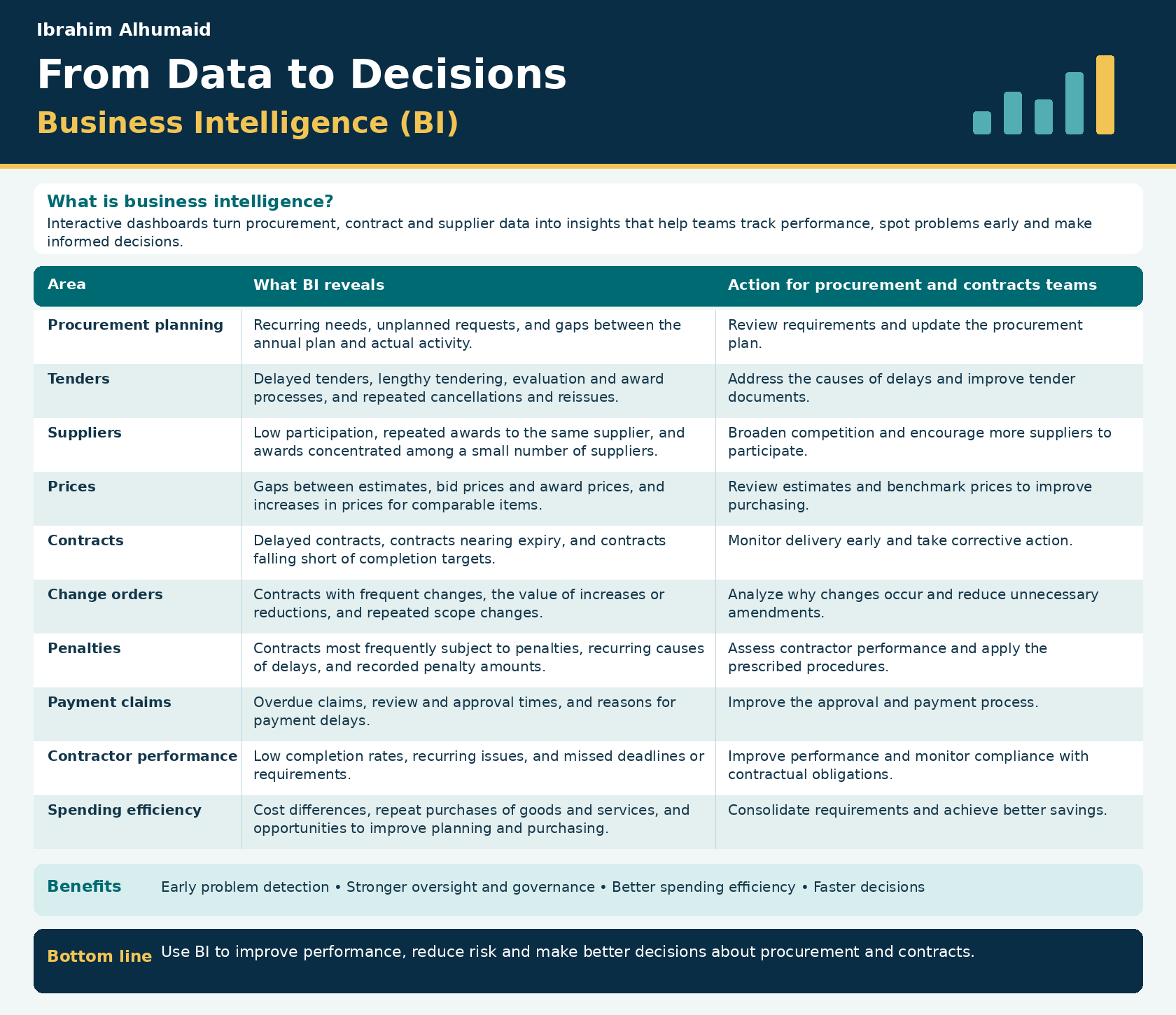
How can procurement and contract data help improve performance and spot problems early?
What is business intelligence?
Business intelligence analyzes data and presents it in interactive dashboards. These dashboards help teams track performance, identify deviations and make decisions about procurement and contracts.
What can BI reveal?
| Area | What BI reveals | Action for procurement and contracts teams |
|---|---|---|
| Procurement planning | Recurring needs, unplanned requests, and gaps between the annual plan and actual activity. | Review requirements and update the procurement plan. |
| Tenders | Delayed tenders, lengthy tendering, evaluation and award processes, and repeated cancellations and reissues. | Address the causes of delays and improve tender documents. |
| Suppliers | Low participation, repeated awards to the same supplier, and awards concentrated among a small number of suppliers. | Broaden competition and encourage more suppliers to participate. |
| Prices | Gaps between estimates, bid prices and award prices, and increases in prices for comparable items. | Review estimates and benchmark prices to improve purchasing. |
| Contracts | Delayed contracts, contracts nearing expiry, and contracts falling short of completion targets. | Monitor delivery early and take corrective action. |
| Change orders | Contracts with frequent changes, the value of increases or reductions, and repeated scope changes. | Analyze why changes occur and reduce unnecessary amendments. |
| Penalties | Contracts most frequently subject to penalties, recurring causes of delays, and recorded penalty amounts. | Assess contractor performance and apply the prescribed procedures. |
| Payment claims | Overdue claims, review and approval times, and reasons for payment delays. | Improve the approval and payment process. |
| Contractor performance | Low completion rates, recurring issues, and missed deadlines or requirements. | Improve performance and monitor compliance with contractual obligations. |
| Spending efficiency | Cost differences, repeat purchases of goods and services, and opportunities to improve planning and purchasing. | Consolidate requirements and achieve better savings. |
Benefits
- Identify problems early.
- Strengthen oversight and governance.
- Improve spending efficiency.
- Make faster, better-informed decisions.
Bottom line
BI helps procurement and contracts teams use data to improve performance, reduce risk, improve spending efficiency and make better-informed decisions.