Category: Tenders
Strategic Management and Government Procurement: Conflict or Integration?
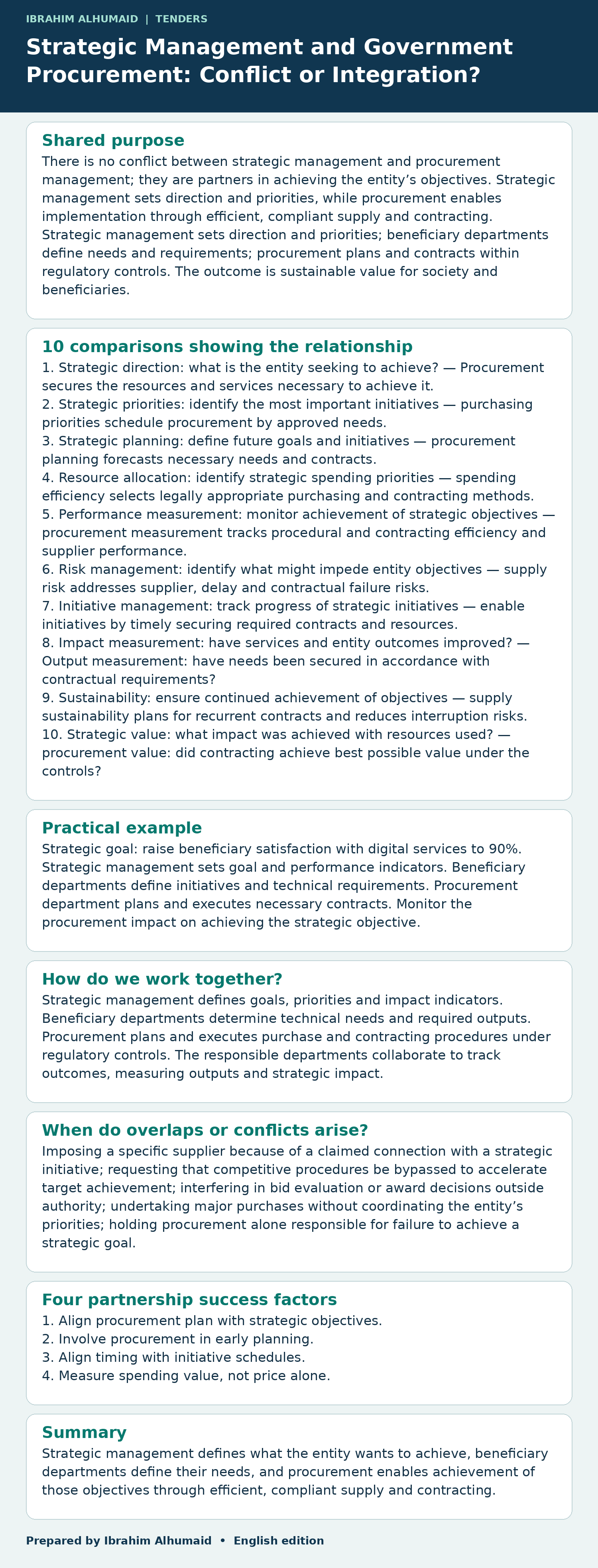
English transcript
Shared purpose
There is no conflict between strategic management and procurement management; they are partners in achieving the entity’s objectives. Strategic management sets direction and priorities, while procurement enables implementation through efficient, compliant supply and contracting. Strategic management sets direction and priorities; beneficiary departments define needs and requirements; procurement plans and contracts within regulatory controls. The outcome is sustainable value for society and beneficiaries.
10 comparisons showing the relationship
1. Strategic direction: what is the entity seeking to achieve? — Procurement secures the resources and services necessary to achieve it.
2. Strategic priorities: identify the most important initiatives — purchasing priorities schedule procurement by approved needs.
3. Strategic planning: define future goals and initiatives — procurement planning forecasts necessary needs and contracts.
4. Resource allocation: identify strategic spending priorities — spending efficiency selects legally appropriate purchasing and contracting methods.
5. Performance measurement: monitor achievement of strategic objectives — procurement measurement tracks procedural and contracting efficiency and supplier performance.
6. Risk management: identify what might impede entity objectives — supply risk addresses supplier, delay and contractual failure risks.
7. Initiative management: track progress of strategic initiatives — enable initiatives by timely securing required contracts and resources.
8. Impact measurement: have services and entity outcomes improved? — Output measurement: have needs been secured in accordance with contractual requirements?
9. Sustainability: ensure continued achievement of objectives — supply sustainability plans for recurrent contracts and reduces interruption risks.
10. Strategic value: what impact was achieved with resources used? — procurement value: did contracting achieve best possible value under the controls?
Practical example
Strategic goal: raise beneficiary satisfaction with digital services to 90%. Strategic management sets goal and performance indicators. Beneficiary departments define initiatives and technical requirements. Procurement department plans and executes necessary contracts. Monitor the procurement impact on achieving the strategic objective.
How do we work together?
Strategic management defines goals, priorities and impact indicators. Beneficiary departments determine technical needs and required outputs. Procurement plans and executes purchase and contracting procedures under regulatory controls. The responsible departments collaborate to track outcomes, measuring outputs and strategic impact.
When do overlaps or conflicts arise?
Imposing a specific supplier because of a claimed connection with a strategic initiative; requesting that competitive procedures be bypassed to accelerate target achievement; interfering in bid evaluation or award decisions outside authority; undertaking major purchases without coordinating the entity’s priorities; holding procurement alone responsible for failure to achieve a strategic goal.
Four partnership success factors
1. Align procurement plan with strategic objectives.
2. Involve procurement in early planning.
3. Align timing with initiative schedules.
4. Measure spending value, not price alone.
Summary
Strategic management defines what the entity wants to achieve, beneficiary departments define their needs, and procurement enables achievement of those objectives through efficient, compliant supply and contracting.