Tenders · Suppliers
Common mistakes when suppliers present company profiles and services to government entities
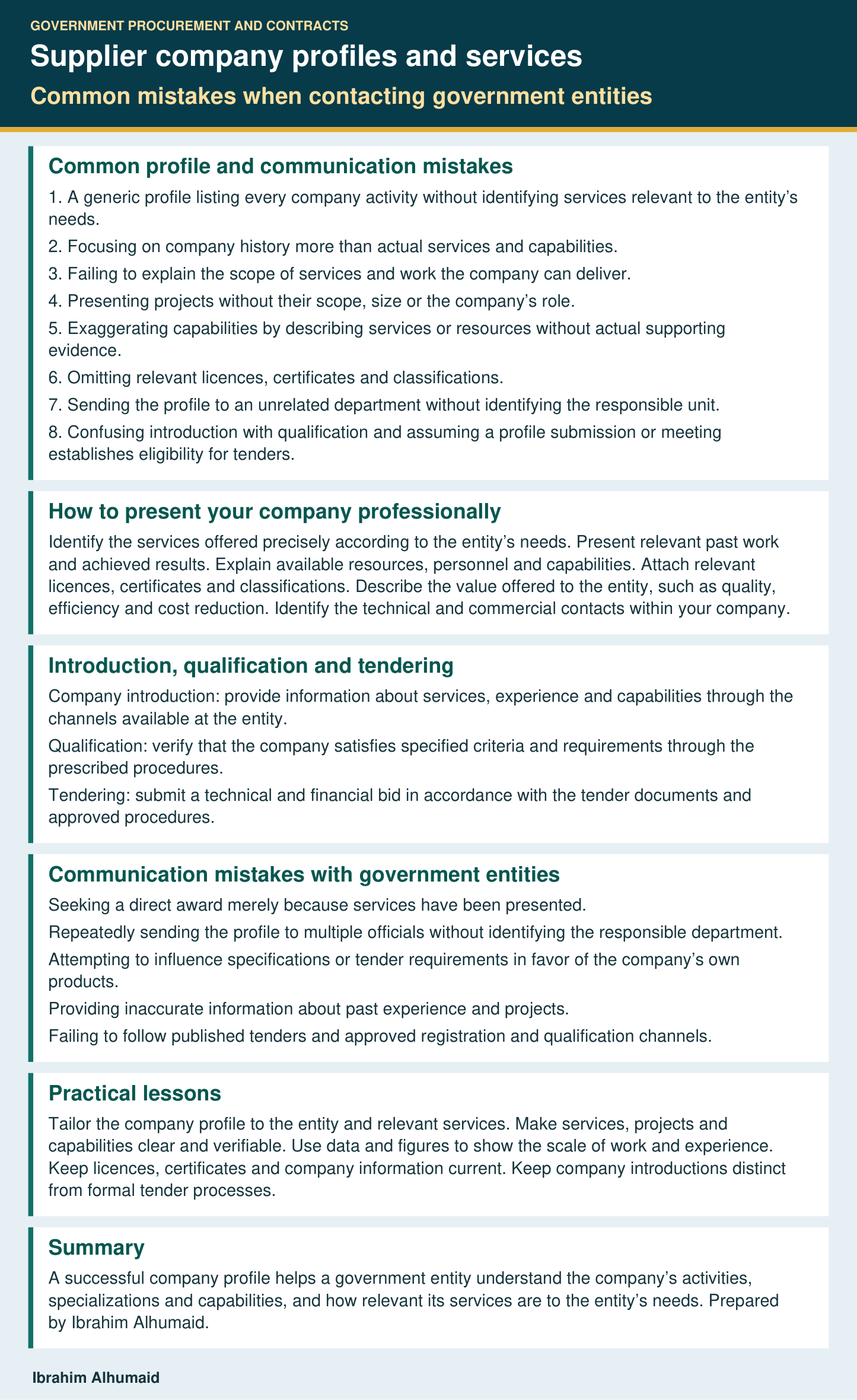
Common profile and communication mistakes
1. A generic profile listing every company activity without identifying services relevant to the entity’s needs.
2. Focusing on company history more than actual services and capabilities.
3. Failing to explain the scope of services and work the company can deliver.
4. Presenting projects without their scope, size or the company’s role.
5. Exaggerating capabilities by describing services or resources without actual supporting evidence.
6. Omitting relevant licences, certificates and classifications.
7. Sending the profile to an unrelated department without identifying the responsible unit.
8. Confusing introduction with qualification and assuming a profile submission or meeting establishes eligibility for tenders.
How to present your company professionally
Identify the services offered precisely according to the entity’s needs. Present relevant past work and achieved results. Explain available resources, personnel and capabilities. Attach relevant licences, certificates and classifications. Describe the value offered to the entity, such as quality, efficiency and cost reduction. Identify the technical and commercial contacts within your company.
Introduction, qualification and tendering
Company introduction: provide information about services, experience and capabilities through the channels available at the entity.
Qualification: verify that the company satisfies specified criteria and requirements through the prescribed procedures.
Tendering: submit a technical and financial bid in accordance with the tender documents and approved procedures.
Communication mistakes with government entities
Seeking a direct award merely because services have been presented.
Repeatedly sending the profile to multiple officials without identifying the responsible department.
Attempting to influence specifications or tender requirements in favor of the company’s own products.
Providing inaccurate information about past experience and projects.
Failing to follow published tenders and approved registration and qualification channels.
Practical lessons
Tailor the company profile to the entity and relevant services. Make services, projects and capabilities clear and verifiable. Use data and figures to show the scale of work and experience. Keep licences, certificates and company information current. Keep company introductions distinct from formal tender processes.
Summary
A successful company profile helps a government entity understand the company’s activities, specializations and capabilities, and how relevant its services are to the entity’s needs. Prepared by Ibrahim Alhumaid.