How to use SWOT analysis in procurement, contracts, and supplier management
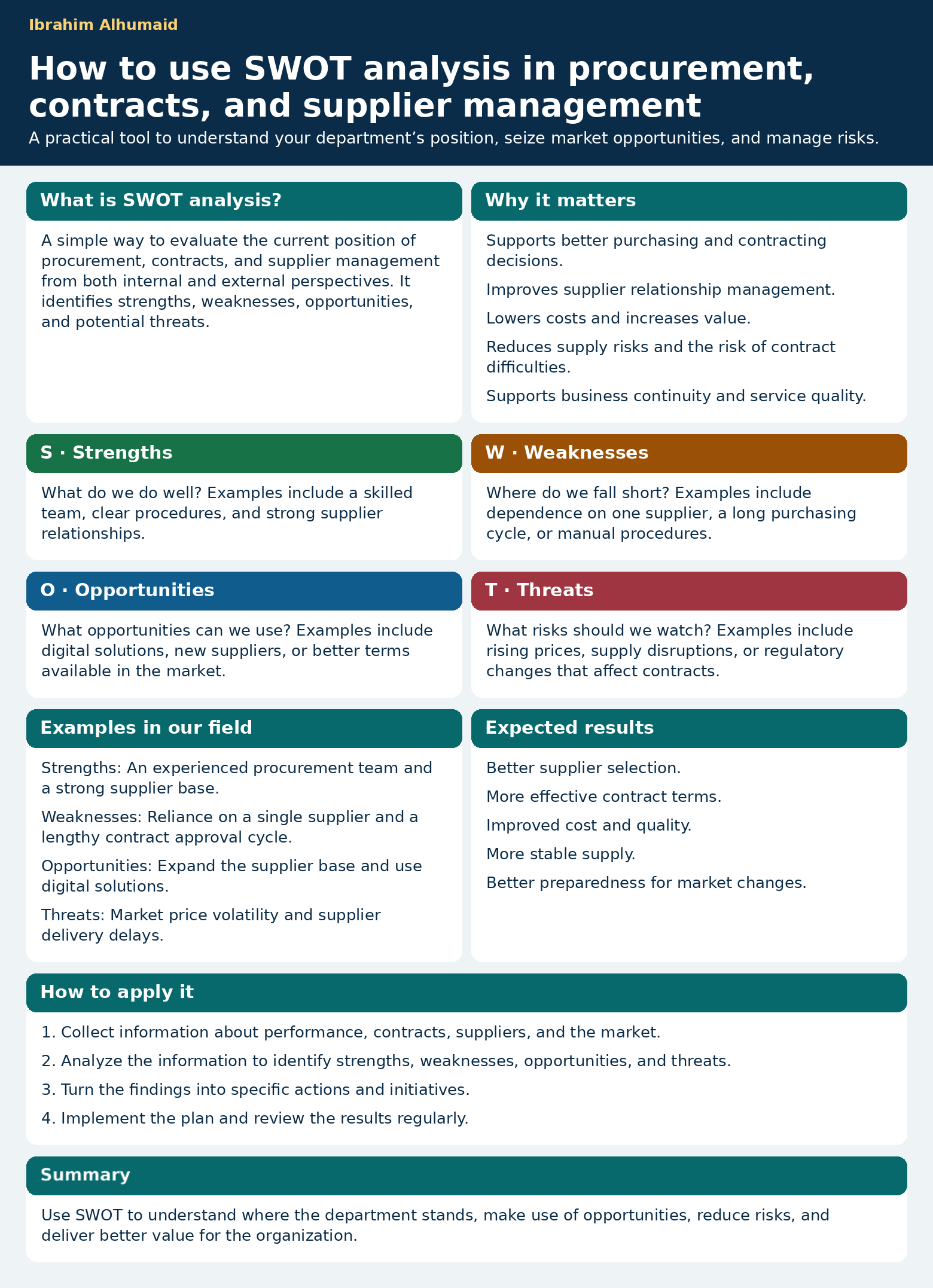
A practical tool to understand your department’s position, seize market opportunities, and manage risks.
What is SWOT analysis?
- A simple way to evaluate the current position of procurement, contracts, and supplier management from both internal and external perspectives. It identifies strengths, weaknesses, opportunities, and potential threats.
Why it matters
- Supports better purchasing and contracting decisions.
- Improves supplier relationship management.
- Lowers costs and increases value.
- Reduces supply risks and the risk of contract difficulties.
- Supports business continuity and service quality.
S · Strengths
- What do we do well? Examples include a skilled team, clear procedures, and strong supplier relationships.
W · Weaknesses
- Where do we fall short? Examples include dependence on one supplier, a long purchasing cycle, or manual procedures.
O · Opportunities
- What opportunities can we use? Examples include digital solutions, new suppliers, or better terms available in the market.
T · Threats
- What risks should we watch? Examples include rising prices, supply disruptions, or regulatory changes that affect contracts.
Examples in our field
- Strengths: An experienced procurement team and a strong supplier base.
- Weaknesses: Reliance on a single supplier and a lengthy contract approval cycle.
- Opportunities: Expand the supplier base and use digital solutions.
- Threats: Market price volatility and supplier delivery delays.
Expected results
- Better supplier selection.
- More effective contract terms.
- Improved cost and quality.
- More stable supply.
- Better preparedness for market changes.
How to apply it
- 1. Collect information about performance, contracts, suppliers, and the market.
- 2. Analyze the information to identify strengths, weaknesses, opportunities, and threats.
- 3. Turn the findings into specific actions and initiatives.
- 4. Implement the plan and review the results regularly.
Summary
- Use SWOT to understand where the department stands, make use of opportunities, reduce risks, and deliver better value for the organization.